Mixing Passions

So I’m in that puppy love stage with the new Canon G10 and kind of wanted to test its resolution and quality under optimum conditions; so I figured I might as well mix it with my other recent passion in the arts and photograph my Stratocaster. (It doesn’t move around much or complain that I’m taking too long setting up the shot.) Anyway, at the moment I’m very pleased with both.

Steve

Profiles in Contempt: Mock Tears


Last night, as you were brushing your teeth and setting your alarm for this morning and kissing your children goodnight after telling them stories, as you were perhaps sipping a glass of wine in a darkened room and looking out under the streetlight as the rain lay its breath upon the spring buds of fruit trees days away from blooming, and perhaps as you listend to a Chopin etude and felt the long trail of memory pull at you–those gone before, now lost in the dark, and those to come–who the Pole tells you, through his carefully phrased notes, that those past and future were and will be just as anxious and feeling and questioning as you are now, facing for the untold time the question not only what life is but why it matters….

…the Oregon State House of Representatives voted your soul away.

Legislature takes its ax, gives state culture 40 whacks

Days before, the State Senate voted to take $1.8 million from the Oregon Cultural Trust and move it to the general fund to make up for a budget shortfall. No doubt the money will pay for some worthwhile, needed programs (and some less noble purposes backed by well-monied lobbies). Competiting priorities are not the point here, though that’s how the lawmakers will try to cover their duplicity. The point is: that money was not theirs to spend.

It was donated by Oregonians, for Oregonians, to provide a life raft for the arts in turbulent times–times exactly like those we face. It was not gathered by taxation but by choice. It has been, to cut to the bone, not reappropriated but stolen.

In an effort to lure people to the state–to spend their money on our symphonies, museums, and theatres as well as to visit our natural wonders–a slogan was devised: Oregon, it’s different here.

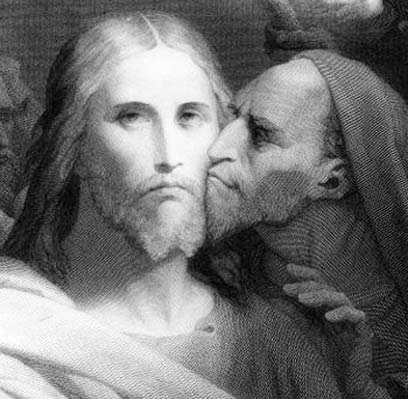
Well, sorry, but it’s not. It’s drearily the same as elsewhere the arts are considered a pretty accessory to be hocked when inconvenient. At a time when people are losing everything and asking themselves whether life really is worth living, the state legislature–House and Senate–has squandered a means to answer that question. They may as well have traded your love and the love of your children’s children for thirty pieces of silver. If politicians such as Margaret Carter don’t feel unspeakably filthy, they should:

“There are those who are whining all over the place about ‘you cut this and you cut that,’ ” she said, wiping away mock tears during a speech on the Senate floor. “The fact is that we had to cut. That’s why I call this the shared cut and shared responsibility model.”

Anybody who can equate betrayal of the public trust with “shared responsibility” has long lost their moral compass and, with it, the authority to define equanimity. But note that we speak of the mock tears of public servants. As such, they serve at the public’s pleasure. So learn how your state senator or representative voted, and, if they voted to plunder donated money from the Oregon Cultural Trust, when their canvassers call or knock on your door next spring, simply say, “March 5, 2009. Oregon Cultural Trust.”

Then hang up the phone or close the door.

Update: Rep. Ben Cannon

As I noted a couple days ago, I sent a strongly worded note to State Representative Ben Cannon about the Oregon legislature’s plan to, uh…”steal” I believe is the right word…steal from Oregon Cultural Trust, and I thought I’d let you know what I’ve heard back….

Well. You know. Ah….how’s the best way to put this? Hmm.

Nothing. I’ve heard nothing

But…he’s probably busy. Or something. Else. Maybe he’ll get back to me when he’s done…with his bike ride! That’s it. He’s out biking! How silly of me. Take your time, Ben. I’ll be right here. Waiting. You know, to see if you’re going to vote for ripping off money people have donated specifically for the arts. It’s not like it’s about anything important. The arts. Like, you know, about anything people have sacrificed and dedicated their lives to. Stuff where, say, they work two or three jobs so they can eke out a few hours to do the thing they love. Shit, I mean, who even remembers, say, 500 hundred years ago, what any artists were doing? Ha! As if. Like that one, uh…oh damn. Shakespeare? Was that was the guy’s name? (Sorry…I’m really just guessing here. Off the top of my head. It might have been Bacon or Johnson or something. The guy, you know, he wrote “A Midsummers…” ah…something or other. It had “summer” in it. Or was it “winter”? Maybe it was both.)

The main this is: no! Hell no! People don’t remember any of that shit. They remember the important things. Like…you know, the name of the mayor of Stratford. England. Five-hundred years ago. Guy was, uh…his name was, uh…oh damn. It was on the tip of my tongue, I swear. I hate it when that happens.

Anyway, I’ll just hang out here, Ben. Whenever you get back. Dried off. You know.

Anytime.

Hmm-hmm-umm. Hmm. Look. Pigeons. Flying around and stuff.

Hmm-umm.

Hello?

S

To Oregon Representative Ben Cannon, re the Oregon Cultural Trust

Dear Representative Cannon:

I’m going to make this short and to the point. I understand the State is facing a budget shortfall, but the Oregon Cultural Trust was designed as life raft for the arts in stormy seas; it was not designed to be the legislature’s piggy bank. The money donated to that fund, particularly through the sale of license plates, was given with the understanding that the funds were to go soley to the arts, not to the general fund, and to use these funds as such would be more than a breach of trust between legislators and the public; it would be fraud.

The State Senate has authorized raiding the Cultural Trust fund, and now the vote comes to you in the House. If you vote to violate the trust of those who have willingly donated their hard-earned money to the arts, I will no longer consider you qualified to represent Oregon’s interests in the House, and I promise I will campaign for and urge others to campaign for other qualified opponents when you face your next primary.

Sincerely,

Steve Patterson

A bad time for arts…

…a good time for entertainment.

This morning’s New York Times carried a story about a resurgence in moviegoing. With the economy so lackluster, people apparently are looking for the cheapest route to forget their problems for awhile, and a couple hours in a moviehouse eases the mind without inflicting extensive financial pain. (It didn’t break it down to this level, but my guess is there’s also an increase in matinee/discount hour attendance.)

So that’s good for folks who work in the movies (if their production companies can actually get financing with credit in the dumper), nor is it surprising: people have long turned to the movies when the world goes to hell. The Great Depression may not have been the best time for the arts, but it did give us screwball comedies, some of which are now classics. Nor is it surprising that attendance is up for lighter fare and down for serious films (or at least films tackling serious subjects). When everything seems to megasuck, it’s hard to crank yourself up for a couple hours of war, famine, plague, and over varieties of suffering. People don’t want to be reminded that they are mortal in a world rife with injustice; they want to fall in love, laugh, and, if they’re Americans, see things blow up.

But it’s further grim news for those of us who can’t forget war, famine, etc., and hence reflect it in our art. As the author of two very tough-minded plays about war (and another two in progress), it’s sobering to see them bounced on nearly a weekly basis, despite good reviews and strong production histories (re: “Waiting on Sean Flynn” and “Liberation”; “Next of Kin” is still in the rewrite stage and not yet on the market, and “Depth of Field” is mired down in a structural writer’s block, though I trust George Montgomery, my war photographer protagonist and a character I’m intensely fond of, will one day prowl the stage).

Even I’m feeling it. Though I don’t imagine I’ll ever be accused of writing fluff–it’s just not in my nature nor, honestly, my range of talents…it’s dark (but busy) in here, folks–I feel the fabulist side of my work calling. I’ve kind of bounced back and forth between gritty stuff about war and politics, and more surreal, dreamlike work, and of late, the dreamlike stuff has been drawing me. It still tends to be kind of heavy, but there’s usually a good deal of humor (attempted at least), and the goal is less about exploring the depths of human cruelty and more about playing with the underpinnings of psychology, the relationship between perception and the doings of the unconscious psyche, and the strangeness that grows from their intersection. As Hunter S. Thompson famously wrote: “When the going gets weird, the weird turn pro.” I’ve also been playing with taking “genres”–such as the noir detective world–and twisting it around with magical realism. Less Michael Herr, more Phillip K. Dick.

It’s not going to make a difference for awhile, I suspect. When your subscriber base is shrinking, grants are evaporating, arts budgets are being cut, ticket sales are down, and corporate and private donations are shrinking, theatres tend toward the familiar over the new, relying on plays with established track records or, if they’re doing new plays, choosing playwrights with established names. (I guess I’m an established name at this point, but I have a very short reach.) It’s not just Portland; I’m hearing this everywhere. Right now it’s more important to keep the patient breathing than happy.

But, as recessions don’t last forever, neither do periods of contraction in the arts. Inevitably, people tire of hap-hap-happy formulas or variations on favorite themes and want something that’ll challenge them. And, as we enter–for good or ill–a time of dynamic change, I think audiences will eventually need work that helps them understand a chaotic world rather than merely assures them that the world will continue for another day. For me personally, that probably means a fallow period for productions (or productions on smaller scales), but the relationship between writing and production is cyclical as well. When you’re not getting produced, you write to make up for the bum news; so I’m actually experiencing a creative upsurge, where I have so much stuff written in notebooks that I haven’t even had time to type it up, much less revise, workshop, and submit it. Those kinds of periods don’t last forever, either: you have ride them while you can. In short, I’m doing a lot of writing. And having fun with it because I’m relatively free to write whatever the hell I want. Freedom sometimes really is a word for nothing left to lose.

To my artist friends, especially those who don’t live or die by performance, I say: work, damn it. Survive, have fun, and lose yourself in the creative process; so that when things turn up, you’ll have fresh new plays and photographs and paintings and poems and songs to introduce to a world starved for the new. And for my performer friends, I guess this is a time to work on your chops, cherish and reconnect with your friends, and find solace in small projects. It’s not fun. It’s scary. And it’s going to be hard to keep the faith. But like the good times, the bad ones don’t last forever.

They just feel like they do.

In Winter, Longing for Summer

Where the cars go by,
All the day and night,
Why don’t you say,
What’s so wrong tonight?
Pray for me,
Praying for the light,
Baby baby,
Let’s go out tonight.

Where the lights all shine,
Like I knew they would,
Be mine all mine,
Baby I’ll be good.
Pray for me,
Praying for the light,
Baby baby,
Let’s go out tonight.

I know a place,
Where everything’s alright,
Alright,
Let’s go out tonight.
Where the cars go by,
All the day and night,
Why don’t you say,
What’s so wrong tonight.

I pray for love,
Coming out alright, yeah,
Oh baby baby,
Let’s go out tonight, yeah.
Baby baby,
Let’s go out tonight,
Let’s go out tonight.

Tonight,
Tonight,
Let’s go out tonight,
Yeah,
Where the cars go by,
Where the lights won’t shine,
Tonight.

An Affection for Vertigo


Lights go down
It’s dark, the jungle is
Your head can’t rule your heart
A feeling is so much stronger
than a thought
Your eyes are wide
And though your soul
It can’t be bought
Your mind can wander

Hello, hello!
¡Hola!
I’m at a place called Vertigo
¿Dónde está?
It’s everything I wish I didn’t know
Except you give me something
I can feel….

Having been at this theatre game for awhile, I’ve seen companies come and go. There were a bunch of us working off our asses in the great Portland theatre expansion of middle 1990s, breaking heads and taking down numbers, and generally thinking we were hot shit. Maybe we were. At least for awhile, it seemed like the center of the city’s edgy set split between Stark Raving Theatre and Theatre Vertigo. I was in the Stark camp (quite proudly), one of several more or less resident playwrights. Stark was all about new plays. Vertigo was doing newish plays (not always but often Portland premieres) mixed with reinventions of established works. They took (and take) no prisoners. Weirdly enough, because the Vertigoites are probably too hip too admit to digging U2, but it’s almost like the song “Vertigo” was tailored for them (which is why I’m sprinkling around the lyrics).

Your love is teaching me
How to kneel!

Somewhere in there, Sowelu split from Stark and added a new flavor of ensemble-driven work. It was a pretty heady time. My company, Pavement Productions, kind of floated through their orbits, like some wayward, jerry-rigged spaceship. I had the pleasure of working with Vertigo on their 24-hour play extravaganzas, and had a small hand in working on A Bright Room Called Day. Generally, we all went to each others’ plays, and actors, directors, and designers floated from company to company. And we spent a good amount of time hanging out in bars and exchanging ideas.

Now I look around, and Vertigo’s kind of the last one standing. The actors, directors, and designers who cut their teeth there are working our flagship theatres, such as Portland Center Stage, Artists Repertory Theatre, and Miracle Theatre Company. But Vertigo’s still at it. A substantial accomplishment. So I just wanted to take a minute to tip my hat: no matter what Vertigo’s doing, you can pretty much count on it poking your brain with a sharp stick. Their current show, Romance, I probably won’t see since as I’ve kind of developed an aversion of Mamet’s bullshit (though I heartily recommend his book of essays Writing in Restaurants for writers of any discipline, and I’ve heard Romance is ruthless and funnier than hell; it certainly has a killer cast). I am really looking forward to Freakshow later in the season, directed by Tom Moorman, who has a head full of ideas that are clearly driving him insane–in a good way.

I’m just glad they’re still out there, stirring things up. There are plenty of other Portland theatres doing good work, but I have a strange little soft spot for the weird spinning beast that started in a bizarre, chilly space on N. Russell with impossible seating, and the many fine artists and friends who have and continue to work under the Vertigo umbrealla. Portland theatre is better because of them.

All of this
All of this can be yours
All of this
All of this can be yours
All of this
All of this can be yours
Just give me what I want
And no one gets hurt