Welcome of the 21st Century, etc.


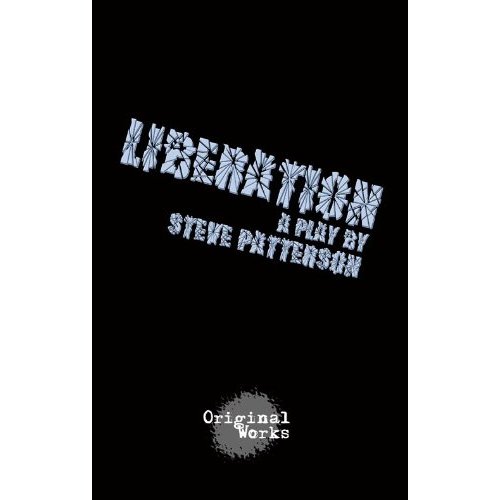
Good news. My play Liberation, published by Original Works Publishing, is now available electronically through Amazon. Kindles to conquer! You now can easily pick up my happy-go-lucky, laugh-a-minute play about the Bosnian War. Buy it for your mom.

(Note: the latter in intended as gallows humor…which characterizes the play, actually. It’s deadly serious stuff, but, I think, works. It definitely seems to pack a punch. People saw it, cried, walked out of the theatre holding hands. Critics praised it, etc. It’s for artistically committed theatres with nerve and passion…so buy it for your local, artistically committed thatre with nerve and passion.)

In short, I’m quite pleased about this. Thanks, Original Works. You can also license performances through them.

To check it out, go to:

Liberation

Walking Through Fertile Grounds

So. Fertile Ground. Yes.

For those outside Portland, the Fertile Ground Festival presents all-new work over a two-week period, written and produced in Portland. Damn, there a lot of good writers, directors, and actors in this town. In all, 68 pieces were featured in Fertile Ground, and it received national coverage from American Theatre Magazine. You’re going to be hearing a lot about Fertile Ground in years to come. Tricia Pancio Mead especially deserves credit for helping the ball get rolling.

I managed to see Sue Mach’s The Shadow Testament, Nick Zagone’s The Missing Pieces, Ellen Margolis’ Elsewhere, and Andrea Stolowitz’s Antartikos. They were all good, all richly imagined, and all completely different. All deserve further production, you producer types out there.

I probably would have seen other shows–there were at least three or more I would have liked to have caught–but I was in an accelerated rehearsal schedule for my own play, Immaterial Matters, which won CoHo Productions’ New by Northwest New Works Contest, with part of the prize being a staged reading of the play during Fertile Ground. My director, Brenda Hubbard, was sharp as hell, made great decisions, and was ruthlessly funny–which helps when you’re staging a play. And my cast was definitely the A-team: Torrey Cornwell, Jim Davis, Adrienne Flagg, Ritah Parrish, Andrew Shanks, and Ebbe Roe Smith. I list them alphabetically because they were all equal in strength and served the work so selflessly.

And the play, Immaterial Matters. I’ve written a bunch of plays at this point. Around 25 full-lengths, I think. I have to say this one has kind of a weird, golden quality about it. Writing it was a delight; every time I put my pen to paper, the words were there. (And to answer possible questions, yeah, I write first drafts in longhand, then type them up into a word processing program, usually editing as I go.)

The play came a deep, personal place, which I think I can talk about now that the play has been through its paces. In 2007, my mom died after a protracted illness. For some time afterward, not surprisingly, I was deep in a dimly lighted tunnel called grief. For both my parents, actually: my father died in 1994, but now I was facing life as a sort of orphan. Every day was like waking up underwater: everything seemed normal until you took your first breath, and then it was a struggle to the surface, and you’d spend the rest of the day treading water, trying not to sink down.

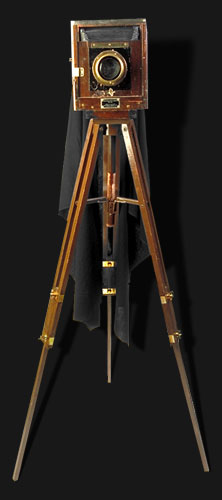
Finally, I said I’d deal with this death monster by looking directly at it, feelings be damned. So I did: my main character was an orphan who, by happenstance, falls into making post-mortem portraiture in the 1880s (it was a vogue at the time). I’ve been a photographer; so I know how the camera serves as a framing device, somehow placing one outside the picture at the same you’re focusing closely. It seemed like an apt metaphor for way one compartmentalizes one’s feelings; so they can be dealt with piece by piece. (If you try to deal with them altogether, it just crushes you.)

I thought it was a strong, unique play, but I wasn’t prepared by the avalanche of praise it received. I mean, if there were folks who didn’t like it, I wasn’t hearing from them. Entirely possible, but people will usually let you know…whether you want to hear it or not. I didn’t receive the usual “I didn’t understand the part” or “I thought may you should change….“ What I did receive was a lot of knowing looks, smiles, and nods, especially from professionals. If you could bottle and sell that feeling, you’d put smack out of business tomorrow.

The piece has such a weird, nighttime texture. It’s a discovery play that builds slowly, the longer the character keeps making the pictures, with each assignment another step in this weird journey until the weight of grief and inevitability of death overwhelm him, including his own loss of his parents. And, at the same time, it’s funny…audiences were definitely laughing. Which seems as it should be: that life is serious as a heart attack and still stupidly hilarious. Maybe especially when you’re having a heart attack.

Anyway, I ended up as pleased as I could be, and a couple theatres are already considering the piece, with a couple more agreeing to look at it. (And, just to prove it’s not invulnerable, one has shot it down already.) I hope all my plays get produced, of course. (Why else would I write them?) But this one I especially look forward to seeing realized, because I think it’s original and says something without preaching. And that’s not an easy trick. And I just want to go see it–which is why I got into writing plays in the first place.

Not long ago, my mom showed up in a dream–a rare guest appearance. She was her rascally self–complaining and full of problems, but funny and endearing, a way I hadn’t seen for a number of years, due to her illness. And I lay in bed for a long while upon waking, not doing anything, but feeling like some kind of debt had been paid, and some kind of separate peace had been achieved. It felt good and complex. Very Zen. Some kind of gift I’d given myself or received from elsewhere.

This has been Fertile Ground’s third year. I’ve participated in both previous years, and had a hell of a lot of fun. But this one, for me, have definitely been the best.

A Word from the Wiseguys


CoHo Productions’ reading of
“Immaterial Matters” gets itself a thumbs-up from the Portland Oregonian’s Marty Hughley…

Fertile Ground festival: more promising picks for new theater and dance

…and from uber-script wizard and all-around theatrical demigod Mead Hunter….

Fertile Ground 2011 opens….any minute now!

So I may be biased (a smidgen), but these guys you can trust. Their word is bond.

Thanks, guys!

Steve

Me Knees is Getting Wobbly…


…but in a good way.

My play “Immaterial Matters” plays Sunday and Monday night at 7:30. Forget me…please come see it for the incredible cast and director.

The problem is that grief blinds. People think different when the burying’s over. A soul’s just leaving, you do anything to keep hold of them. Once they’re done with ashes to ashes and paying off the doctor and the undertaker and the grave diggers and the preacher, the last thing they want to remember is the dying.-Reilly O’Rourke, Immaterial Matters

Immaterial Matters by Steve Patterson

The Abyss Looks Back

Portland’s a relatively peaceful place. I say relatively because, if you read the Metro section of The Oregonian, you’ll be treated to semi-regular tales of family members murdering each other, meth freak antics, weird suicides, and robberies gone awry—the dark background music that’s long been a part of American society. Some oldsters will tell you it used to be different, you didn’t used to lock your doors, left your key in your car, and so on; others will share a penetrating look and tell you it’s always been this way, but people just didn’t talk about it.

History tends to bear out the latter view. A read of David Lesy’s “Wisconsin Death Trip”—a collection of 1880s newspaper clippings and photographs from a small, Midwest town—is a surreal, numbing litany of murder, madness, suicide, and disease. If anything, you might come away thinking things have improved. Maybe they did for awhile in the 1950s…unless you were black, gay, female, or weird.

And then Jared Loughner—Travis Bickle made flesh—stares out from the newspaper or the Web. (Anybody who’s spent time on listservs or message boards know Web is a more appropriate term than Internet.)

Around 1993, Portland had one its perfect spring-into-summer days, and I took a break from work to go for a walk, relax, and drink it in. My mind was channel surfing, the way it will when you’ve been concentrating for awhile and let the brain off the leash to run. I vaguely registered a tall, lanky man in a stocking cap passing, and a bum note registered as to why someone would wear a stocking cap on a balmy day.

Then my head exploded with sudden pressure, and my vision briefly went black. I recovered almost instantly, and, as I straightened, I saw the man in the stocking cap flick his fist out at a bystander. It was an absent, dismissive gesture, as though swatting flies. He was just walking down the street, randomly hitting people. He missed the person ahead, but he’d popped me on the left cheekbone. It stung and surprised, but did no physical damage. I didn’t even bruise. Other people were solicitous, caring, but I and another guy took off after the man. I was angry, but I also didn’t want to see others hurt. He disappeared at some point. I spoke with a concerned, professional police officer, who took my information and phone number. Directly thereafter, I pretty much fell apart.

I was contacted a couple of days later, and the police informed me the man was apprehended, that he was familiar to downtown officers, suffered from mental illness, and had gone off his medication. He was under treatment again. I declined charges, both out of empathy and knowing the outcome would largely be the same. The incident lingered—I had occasional flashbacks—but times, good and bad, eventually washed the incident away (though I can still feel it if I remember—such is the power of violence upon memory).

The last few months, I’ve been seeing an older, tall, lanky man on the streets. He swears at unseen people and occasionally strikes empty air. Menace and foreboding surround him. I don’t know if he’s the same guy, but the similarities are strong enough that it’s brought back the Great Cheekbone Bashing of 1993. My assailant caught my eye for just an instant that day, staring out from the same infinite darkness you can see in Jared Loughner’s gaze. I sometimes wonder if I should do something about the man who fights demons only he can see, but I’ve asked, and he’s well known to local merchants and, I’m sure, the police. I just discreetly avoid him.

Right-wingers are playing defense as Loughner shot a Democrat and has used some far-right, anti-government rhetoric; they’re also probably relieved that he appears to be out of his mind. But I recently heard a small-time, right-wing talker use a fallacious argument that shows how deeply the inflammatory set have been shaken by the recent shooting.

He blamed liberals for turning mental inmates out of asylums and endangering society. It’s true that compassionate mental health advocates pushed from more humane treatment of disturbed people, which included moving them from institutions to halfway houses and outpatient treatment, where, with medication and counseling, they could be woven back into society’s fabric.

The movement gained traction during Jimmy Carter’s administration, a framework put in place. What the talk show host won’t—and can’t—say is the process accelerated under Ronald Reagan, using a budget-cutting rationale, while his administration cut spending for treatment. As a friend of mine put it: “Reagan turned the whole country into an outdoor asylum, then blamed the chaos on bleeding-heart liberals.”

Which is damned cunning politics, but not particularly good for society. Analogies may be apt, but reality is always more complex; there’s more than enough blame to go around on this issue, from politicians to the medical establishment to insurance companies. But an echo of that sentiment resonates today. In short, given that politicians and commentators have played with fire, it’s not surprising they’re feeling singed. And they can’t back down because we’re talking about political leverage here, and an industry built on jacking listeners’ adrenaline levels. Getting angry, oddly enough, is fun. It reinforces belief systems, whether you’re in agreement or disagreement. People get hooked on the rush (no pun intended, seriously), come back for more, ratings go up, and merchants buy ads. It’s more profitable and secure than selling heroin.

But it’s dangerous. Out of the most perfect spring days, storms erupt.

Jared Loughner, on the day of the Tucson shooting, wore a hooded sweatshirt, possibly to keep his shaven head warm. He could just as easily have worn a stocking cap.
Weirdness: Butter for the Writer’s Bread

Research leads in many wry and byway paths. To wit, a bit of reading about Lord Byron (famously: mad, bad, and dangerous to know) led me, by hook and crook, to an anecdote about Mary Shelley, wife of Percy Bysshe Shelley, heroic romantic poet, who, like all good heroic romantic poets, died heroically and stupidly…but most of all mysteriously. His boat sank and he washed up on shore, and per the quarantine rules of the time, they cremated him on the beach. Sorry, chap.

However, many years later, after Mary died of an apparent brain tumor (not as good as drowning, but exploding heads have their allure), the Shelley’s opened a box in Mary’s desk and found a silk parcel, which was wrapped in Percy Bysshe Shelley’s poem “Adonaïs” and contained locks of her dead childrens’ hair along with a fragment of Percy’s heart. Yeah, his actual phsycial heart, apparently swiped from the pyre. These Romantics knew how to do it right.

Flash forward to to 1969, and the Stones play a free concert in Swinging London’s Hyde Park, as a tribute to the recently expired Brian Jones (who heroically and stupidly drowned in his swimming pool…under mysterious circumstances), during which Mick Jagger reads an excerpt from “Adonaïs” while butterflies are released. Jagger wears a little girl’s dress. Nice touch. And then Mick Taylor, Jones’ replacement on guitar, comes out and burns the place down.

A pretty bunch, all of them.

Here’s the excerpt; Shelley and Byron would have been proud:

Peace, peace! he is not dead, he doth not sleep
He hath awakened from the dream of life
‘Tis we, who lost in stormy visions, keep
With phantoms an unprofitable strife,
And in mad trance, strike with our spirit’s knife
Invulnerable nothings. — We decay
Like corpses in a charnel; fear and grief
Convulse us and consume us day by day,
And cold hopes swarm like worms within our living clay.

The One remains, the many change and pass;
Heaven’s light forever shines, Earth’s shadows fly;
Life, like a dome of many-coloured glass,
Stains the white radiance of Eternity,
Until Death tramples it to fragments. — Die,
If thou wouldst be with that which thou dost seek!
Follow where all is fled! — Rome’s azure sky,
Flowers, ruins, statues, music, words, are weak
The glory they transfuse with fitting truth to speak.

Crossing Points


You search and search for a way in, for what are commonly termed “ideas,” but what are really doorways into the word room. And then, when they come, you resist because you know, if they really take off, you belong to the words, and there’s nothing you can do but see where they take you. If you find a title, forget it. Especially if it’s a good one. You might as well snap on the handcuffs because it’s gone from “writing” to “being a piece.” And you just have to hang on for the ride.

I have a title. Or it has me.

Of course, you can short-circuit this at any time, just by telling someone what the title is. It automatically dissipates the magic, your attention flags, and you’re free to get on with normal life. For example, I could just tell you the title is….

But…then I wouldn’t have anything to write, and I’d have to start searching again.

This is a weird business I’m in.

That Last Waltz


Thirty-four years ago, tomorrow, four Canadians and a wiry guy from Arkansas played their final concert as The Band at Winterland. Martin Scorcese made a magnificent concert film of the proceeding—perhaps the best rock’n’roll film ever. The Band played their own funny, heartbreaking songs (“It Makes No Difference”; “The Shape I’m In” (pouring out of Richard Manuel); “The Night They Drove Old Dixie Down” (maybe Levon Helm’s finest moment); and a transcendent “The Weight” along with The Staple Singers, who inspired The Band’s multipart vocals), then blithely served as some of the world’s greatest sidemen to a parade of defining voices of the era: Muddy Waters, Neil Young, Eric Clapton, Joni Mitchell, Dr. John, Van Morrison, Paul Butterfield, and others, including a guy named Dylan, who gave The Band a break when they were billed as The Hawks, having split as Ronnie Hawkins’ backup band.

Not too long ago, a four-CD set from the concert was released, and it’s filled with wonderful pieces never included in the film or the original, three-LP concert album. Listening to it now, with distance and time, the choice of material is striking: nearly every song can be viewed as a reflection on time’s passing. The Sixties were done, consciousness expansion gone in a blur of Quaaludes, coke, and smack. The world had certainly changed, but the revolution failed, done in by Nixon, Vietnam, oil shocks, recession, and its own, inherent contradictions.

Even the music, once so high and wild, had degenerated into shadows of itself; the same year The Last Waltz celebrated what had been, The Ramones were busy burying it three chords at a time.

What you do hear in The Last Waltz is the blues. Blues and R&B underlies most of the cuts and The Band’s sound. Muddy Waters’ time onstage is all too brief. The Sixties may have been a bright flare that had burned itself out, but the blues are forever, relevant, and timeless. And the blues still have the power to cut through rock industry bullshit and coked up egos.

Still, just a look at the song titles, played in addition to The Band’s songs (which gloriously reflected the past as in a funhouse mirror), carry the sense of an era’s closing: “Such a Night”; “Down South in New Orleans” (one of the simplest, best songs ever written: ‘my ship’s at anchor/my suitcase packed/got a one-way ticket/ain’t comin’ back’); “All Our Past Times”; “Further on Up the Road”; “Helpless”; “Furry Sings the Blues”; “Tura Lura Lura”; and “Forever Young.”

And the closer. Everybody came out to sing it. Ringo sat in on drums, Ronnie Wood on lead guitar—respectively representing the Beatles and the Stones. You don’t get much more iconic than that, unless you could drag out Lennon and Jagger (not bloody likely). It was a song from The Basement Tapes, when Dylan had dropped off the circuit and holed up in Woodstock, New York. Informally, he would get together with his neighbors, The Band, and they would have a few drinks, roll the tape, and see what happened. It’s amusing to wonder what Robbie Robertson, Rick Danko, Levon Helm, Richard Manuel, and Garth Hudson thought one apocryphal evening when Bob Dylan unfolded a piece of paper and said something like: “Uh…I got this thing called ‘I Shall Be Released.’ Wanna’ try it?”

It was, as they say, a long time ago. A lot of those folks—Muddy, Butterfield, Bill Graham, Bobby Charles, Danko, and…oh man…Richard Manuel—are no longer with us. Everything had gone to hell and was fucked up. Everybody was fucked up. Everything’s still fucked up. But, if you angle your head just right and look down into yourself, you can still see your reflection somewhere so high above that wall.