Stay tuned. Soon I’ll be introducing my blog on: theatre, arts, culture, the writing life, and, occasionally, politics (once a journalist, always a journalist). You can also visit my other blog: splattworks
theatre
Setting Off Sparks
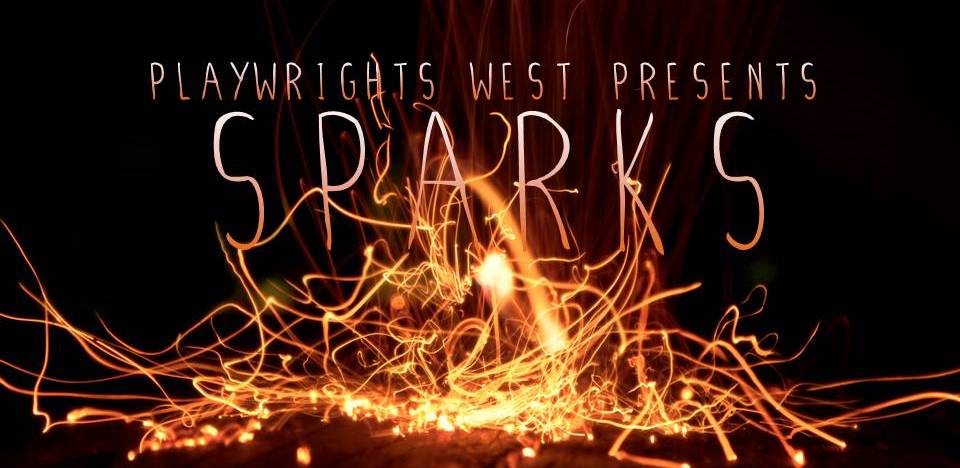
This really is a post for Portlanders, but, as it’s about a cool, artistically oriented event, other folks with like minds might find it interesting (and you might try it in your burg).
Monday night (May 20th), Playwrights West, a group of professional playwrights (of which I’m a member) based in Portland, is throwing a party. Yes, it’s a fundraiser for a full production of one of our playwright’s works (Licking Batteries by the wonderful Ellen Margolis), but it’s kind of turned into a celebration–a celebration of the joy of creating new work.
Dubbed Sparks, the evening features short pieces–either standalone short works or excerpts from longer works–from eight remarkable writers (and one bozo…me). It’s what we have to offer…our words, and some terrific actors have signed on to breathe those words to into being. And since we’re all getting together, there’ll be food and drink and a silent auction and good vibes: what could best be described as a party.
Here’s the fascinating thing to me, though. All of us in Playwrights West share a common purpose: to stage the new works of our members and to raise awaeness of the power and delight inherent in presenting premieres (and we’re just lucky to have access to some killer scripts). All of us are professionals who have had our works staged in many forms and venues, and, frankly, we all can write. (Present company excepted…or at least tolerated.)
But, man, what a lot of different voices. All really original, and all coming at the work from different angles, bringing unique voices and sensibilities into play.
So what the folks who attend Sparks will be able to experience is a terrific mosaic of ideas, images, power, and, well, light from these eight writers (and the bozo). In one place, at one time (and only at this one time under the same tent). The works range from new projects, still in progress, to new works about to be born as fully realized productions, such as an excerpt from Andrea Stolowitz’s Ithaka, which is about to open at Artists Repretory Theatre (where it won a commission), and, of course, Ellen’s Licking Batteries–the play we’re fully staging in August. And, if you drop by, you get to embrace these works–to celebrate their originality and diversity–with like-minded people…those who love new theatre. (You know who you are.)
Really, Sparks is a way to say: yes, new work counts. It keeps theatre alive, vibrant, surprising, ever changing. It’s vital. It matters. And we can do it really, really well, right here in Portland. Oh yes, we can.
So drive, walk, take the streetcar, and come on down to CoHo Theatre on Monday night. Have some food and drink and laughs. Maybe try out a cool new outfit. And take what promises to be an unforgettable ride with eight splendid, absolutely kick-ass writers (and one bozo).
Details follow. See you there….
Steve
—————
Sparks: A Benefit Performance
By the writers of Playwrights West
Directed by Playwrights West Company Member Andrew Wardenaar
Date: Monday, May 20th
Time: Cocktail Hour & Silent Auction at 6 pm. Performance at 7 pm. Postshow reception at 8:30 pm.
Venue: CoHo Theatre (2257 NW Raleigh St)
Cost: $40; tickets online or at door (cash/check only) subject to availability. Seating is limited.
Purchase Tickets from: sparks.brownpapertickets.com
Playwrights West, a professional theatre company composed of nine acclaimed local playwrights, announces Sparks, its first-ever gala benefit performance. This performance will feature short excerpts of works by all nine member playwrights, culminating in a world premiere excerpt of Playwrights West’s upcoming 2013 season performance, Licking Batteries by Ellen Margolis. In addition to the performance, the evening will feature delicious food and wine and a silent auction.
Featuring excerpts from: Eating in the Dark by Debbie Lamedman; Consider the Ant by Karin Magaldi; Licking Batteries by Ellen Margolis; Bus Stop by Steve Patterson; Ithaka by Andrea Stolowitz (opening May 28th at Artists Repertory Theatre); Jeepers by Andrew Wardenaar; Where There Is Darkness, Light by Claire Willett; The Chain and the Gear by Patrick Wohlmut; and Forky by Matthew B. Zrebski.
Instant Karma

Brooding Works Wonders
So I write a piece about the ups and downs of the writing life–receiving rejections, specifically–so naturally, I received a clutch of mondo cool theatres (which shall remain nameless unless some great happens) asking to see my work. Never fails (except when it does).
Also in the Department of Great Things, I just got word that “The Centering,” a one-man show I wrote with Portland actor extraordinaire Chris Harder, gets a two-week extension at CoHo Theatre after a three-week stand at Portland’s Shoebox Theatre…and to top it off, The Oregonian gives it the kind of review that goes down like a hot buttered rum on a freezing day:
‘The Centering’ gets additional two-week run at CoHo Theater
Maybe I should whine more often.
Bombardment, Episode 21: Everything Stops

Splattworks concludes its presentation of Bombardment, a two-act drama by Steve Patterson.
Thank you all, over these last couple of weeks, for reading, for your support, and for your gracious comments. It has been a terrific pleasure watching the play’s readership rise and expand far beyond its humble beginnings, and it’s been great fun for me to spend time with the play again. Your comments, observations, etc., are welcome. If you would like to reach me off the blog, my e-mail is splatterson@mindspring.com
[EPISODE 21]
The wind dies down. Lights gradually rise. CARMELITA and PLACID hunch over, hanging on the lines like prisoners shot at the stake. ARETHA and CORNO stand with their backs to the audience.
ARETHA/CORNO: Hello? Hello? Anyone there? Hello?
ARETHA and CORNO face the audience. Their shades are gone, their eye sockets hollow. Blood streams down their faces. They stagger forward, fingers outstretched, becoming caught in the lines.
ARETHA/CORNO: Hello? Can you hear me? Can you help me? I can’t see. Help me, I’m caught. I need help. Please. I’m caught. Please, please, please….
They continue calling “please” as they struggle with the cords. Their calls take on a synchronous, mechanical quality. A chant. An incantation. The sounds of planes begin, steadily rising. Chant and airplanes rise to crescendo. Blackout. Everything stops.
End of play.
Commencing Bombardment
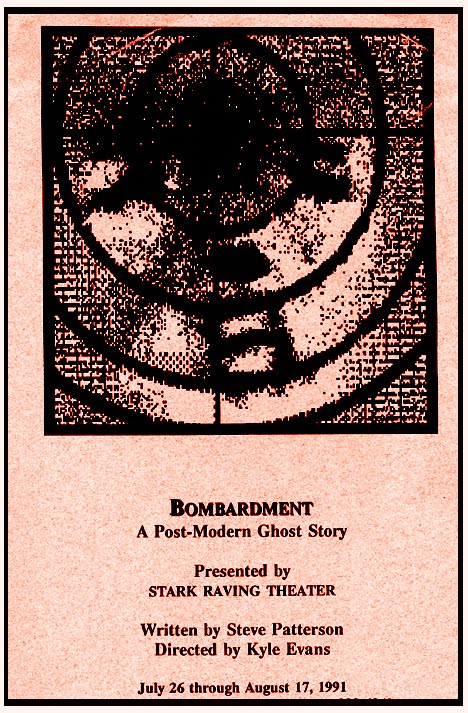 Back in the early Nineties, we had ourselves a perfect little pocket war, known as Operation Desert Shield, the only U.S. war, so far, to sound like a feminine hygiene product. It was a swift, unforgettable thing, with CNN broadcasting live footage of Scud missiles falling on Tel Aviv, our wealthy friends, the Kuwaitis, getting looted by another one of our wealthy friends, one Saddam Hussein. Back during the Cold War, we weren’t always too choosy about who we took up with, and, as often happens, some of our relationships ended badly.
Seriously, it was a terrible war, with real bombs, blood, and bodies, and there was nothing amusing about it. I keenly remember feeling an awful sense of despair, as it became readily apparent the violence was inevitable, with no true certainty how it would turn out. Just as with its sequel, Operation Desert Storm (like most sequels, even more of a bummer), there were legitimate fears the war would set the entirely Middle East ablaze and completely destabilize the world economy. We’d have to wait another decade for that to happen.
History felt like an irresistible wave, a tsunami that rolled over everyone, no matter where they lived and how much money they did or didn’t have. The sense of fear and helplessness haunted me long after we’d tucked everyone back in their boxes, and I dealt with it the way writers do: I picked up the pen. In this case, I wrote a two-act drama called Bombardment.
At that time, I’d become friends with some wickedly clever artists running a new Portland Theatre Company, Stark Raving Theatre, and I asked them if they’d take a look at it. You know, just to see what they thought. They said, sure. And the next thing I knew, we were building a set. That’s the way theatre ought to be done–by the seat of your pants, with absolutely no idea what you’re getting yourself into.
The four-actor play–two men, two women–was directed by the very talented Kyle Evans, and ran for six weeks. It took a typical trajectory for a new play by a then-unknown playwright: a great opening (when everybody’s friends and family showed up), struggling weeknights, but stronger weekends. Reviewers were puzzled, dismissive, or both, but word got around that the play was a wild little beast, and really different from anything else running in town. Weekend audiences began to grow, and we closed strongly.
A year later, I tried to hide myself in a plush theatre seat at the Oregon Book Awards ceremony (Oregon’s top literary prize), absolutely terrified that Bombardment, one of three Finalists, might actually win, and I’d have to say something in front of a bunch of writers much more distinguished than myself.
It didn’t win (it’d be almost 20 years before I’d finally bring the OBA home for Lost Wavelengths), but the Bombardment experience really set the hook: I wanted to keep writing plays. For good or ill (depending on who you ask), I’ve been doing it ever since.
So I’ve always had kind of a soft spot for Bombardment, even though it totally screwed up my life. The play was just so . . . out there. I was so new to playwriting, I didn’t even know how many rules I’d blithely shattered. Bombardment was like letting the horse loose, holding on, and just marveling at its power while trying not to worry about getting killed.
Over the years, as I’ve honed my craft (supposedly), I’d dig the play out of the files, work on it a bit, maybe shop it around to a few theatres, maybe put it back in the folder. I came to accept it just wasn’t the kind of play for bigger theatres–the kind afraid of possibly alienating their subscription base. It was just too jagged, non-linear, brutal, and, frankly, weird. It’s a play for theatrical buccaneers.
And that’s why we’re here.
[To be continued]
Another Shade of Dark
My plays have never been known for being especially frothy. Blue is, apparently, my favored color–in clothing, language, and music. I suppose that reflects my outlook. Humor, however, serves an an antidote to the blues, on-stage and in life, so I try to find it even in the heaviest work. Another requisite in tackling the serious is to do it very, very well. I don’t know that I’ve succeeded in that, but, believe me, I have tried. Serious themes deserves the best, and I’ve spent many sleepless nights wondering if I’ve done the work justice.
The last few years, I’ve largely focused more on the fantastic: plays exploring the psyche or utilizing magic realism or alternate realities, and I’m turning, also, to exploring the human condition through our relations to the arts, of late writing about music and photography. But, for a good number of years, I was known as the “war guy.”
That is, I wrote a series of plays–four in all–about war and its aftermath. Three explore the subject through the characters of journalists: Waiting on Sean Flynn (Vietnam); Liberation (Bosnia); and Depth of Field (Liberia, Sierra Leone, and 9/11). Reporters, serving as our eyes and ears during conflicts open a breathtaking, immediate window into war narratives. Plus I used to be a reporter–never a war correspondent, though (I get asked)–and I have great admiration for those who put themselves at risk to the show the world the cruelties of which we are capable. They’re also damned interesting people, which makes them fun to write about.
Flynn and Liberation have been successfully produced multiple times (and Liberation has been published by Original Works Publishing). Depth of Field remains in progress. I’ve finished a number of drafts, but I still haven’t quite cracked the code on that one. I haven’t given up, either.
The fourth play, Next of Kin, stands as a sort of coda to the trilogy, shifting the focus from reporters to soldiers and their families, whose vital stories I felt remained somewhat unaddressed by the other plays. Next of Kin, looking at Iraq, is also the most contemporary work. It’s a good, strong play, I think, which had a very successful staged reading last year with the splendid folks at Portland Theatre Works; I’m currently shopping the premiere to theatres around the country.
Though I never planned it, the plays developed their own arc. Flynn asks why we’ve come to war, and whether we should stay or go? Liberation, acknowledging we’re trapped in war, asks how much do we sacrifice to tell the story? Depth of Field asks whether, after surviving war and paying the price, why return. And Next of Kin asks what we do and who we are when its over.
Writing these plays has been, I think, a substantial, unique accomplishment. (I have kind of a dream of having them collected in a single volume someday. Maybe it’ll happen, though it’s hard to say, given the state of both theatre and publishing these days.) I didn’t set out to do it: it just happened. They’ve made me a few bucks along the way–not very much. But they have rewarded me, however, so richly in terms of experience, introducing me to people and places I’ll never forget (and never want to, even when the memories are ghastly).
They’ve given me a chance to work with brilliant directors, actors, and designers on a subject that seems to bond artists they way soldiers and reporters bond in the field: everyone knows this is a serious, important issue that demands our best, and the subject tends to strip away our bullshit because, let’s face it, it’s about living or dying, killing or being killed. When you work like that, you get down to the core of your collaborators, exposing who you really are, and it’s one of the primary reasons I have such deep affection and admiration for those who work in this tough, sometimes ephemeral business. If you’re lucky, you’ll learn to like your colleagues, and they become your friends; if you’re really lucky, you’ll come to love them.
The plays have also afforded me some of the most intense audience interactions of my career. During ther performance, the theatre feels beyond electric, the air supercharged. Total strangers, speaking to me after shows, have told me stories they may have never told their families. After a performance of Liberation, a Bosnian woman told me how she walked, barefoot, away from her hometown as its men and boys were being systematically slaughtered. And then she thanked me for having the courage to tell the truth. Never, ever have I felt so simultaneously honored and humbled. That moment remains a treasure I will carry to my end.
Finally, this subject has allowed me to talk to and exchange letters and e-mails with with veterans and war correspondents, which has been worth every minute of sweating through the work, worry, and heartache that comes with making theatre.
I feel these plays have deepened my soul. When I pick up the morning newspaper and read so-and-so many have been killed or wounded wherever they’ve been killed or wounded this day, the pictures and feelings that come to my mind may be different than yours. Not better or worse, just…different. If you have a heart, you can’t write about war without it changing you, and you can’t write about war effectively if you don’t have a heart. Sometimes I think it’s damaged me, you know? Just a little. Knowing a little too much about the worst humans can be and the most terrible things that can happen to us. Whatever I’ve learned and kept inside, It’s nothing compared to those who have been there, and it’s paid me back more than I could ever imagine.
This Memorial Day, as we approach the 10th anniversary of September 11th, I just want to take a moment thank all those who have served–and those who have reported the world’s self-inflicted catastrophes–for putting your very lives at risk. That’s it. A small and quiet acknowledgement that’s but a pebble in the ocean compared with your experience. With a special thanks, from as deep as I can reach, for those who have been so gracious to share your best and worst stories with me.
Here’s to the day when all our work becomes obsolete.
So Many Theatre Openings, So Little Time
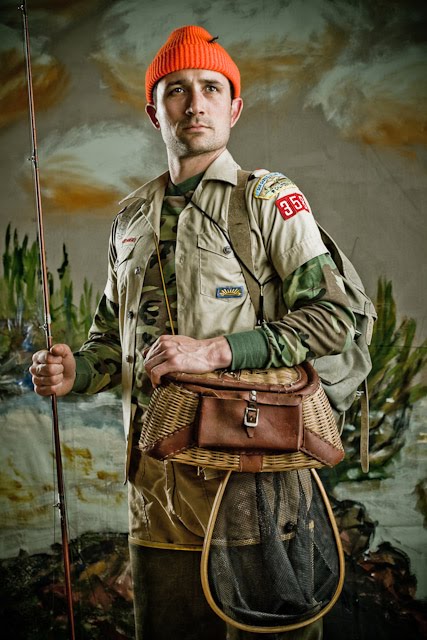
So the other show I’m involved in and is opening August 19th is Fishing For My Father; because Next of Kin and Fishing open the same night, I’m going to have to wait a week to see Fishing…which is a pleasurable sort of dilemma.
Fishing for My Father really isn’t my show. It’s actor/producer/playwright/wunderkind Chris Harder’s (with whom I co-wrote The Centering a couple years ago). I just contributed to some monologues that served as a jumping off point for Chris’s extravagantly versatile imagination. I can’t wait to see what he’s come up with, in company with some of Portland’s most talented theatre makers (except yours truly, who’s kind of the Rain Man of the bunch). Details follow below.
Break a leg, Mr. Theatre Wizard….
——-
Fishing For My Father
Playing at the CoHo Theatre
August 19, 2010 through August 29, 2010
A family fishing trip turns adventure as an outdoorsman struggles to discover the meaning of fatherhood.
This inventive solo show is packed with traditional monologues, impressionistic dance and surreal clown antics, along with original music and recorded interviews from the community. A fast-paced, funny and heartwarming world premier you won’t want to miss!
Devised with some of Portland’s top theatre makers, Chris Harder collaborates with Jonathan Walters (Hand2Mouth Theatre), Philip Cuomo (Third Rail Rep), Steve Patterson (Oregon Book Award), Christine Calfas (Dance/Movement), Gretchen Corbett (Third Rail Rep), Rebecca Martinez (Sojourn Theatre), Tim Stapleton (Set), Jim Davis and Jonathan Kreitler (Music).
Warning: Armed and Dangerous
 If you see the two women above, be forewarned: they are extremely talented, ruthlessly funny, and frighteningly intelligent. They’re also doing a show called Live Nude Fear! which runs for one more week at Portland’s IFCC (the link below provides the details). I will admit that they’ve been friends of mine for years and we’ve worked together on several memorable theatre projects, but their poor choice in friends doesn’t diminish that they’ve put together a terrific show that, from time to time, veers delightfully out into the ozone, where the air gets weird. Steve sez check it out:
A Simple Wish for Theatre
 I have, indeed, a simple wish for theatre.
I wish that each season, every artistic director would take a deep breath and program at least one play that truly scares the Holy Fucking Shit out of them. Not some “safe” dangerous play that’s a little controversial or has a bit of nudity or a naughty word or two. Something brand new, raw and newly hatched, or seldom produced, obscure and bizarre–something so far out on the edge, so utterly dangerous and subversive and deep into the ozone that they wake up in cold sweats night after night, thinking: This could be it. This one could lose my theatre.
Just one. Even as a late night or a single performance.
Once a year, I want every theatre to sufficiently give a damn to roll the big dice. And, when the lights come up, I want audiences to sit paralyzed in their seats, afraid to move. And I want it to become as much a tradition as Dickens at Christmas. What? You didn’t do a dangerous show this year? What the hell’s wrong with you? Pussy.
Is that really so fucking much to ask?
The Weight
I pulled into Nazareth, I was feelin’ about half past dead;
I just need some place where I can lay my head.
“Hey, mister, can you tell me where a man might find a bed?”
He just grinned and shook my hand, and “No!”, was all he said.
How do Chris Coleman, Allen Nause, Olga Sanchez,* or any other artistic director with a full season do it?
Which is to say, I’ve been a producer off and on since 1990, really forgotten how many shows I’ve helmed (of other writers works as well, not just mine), and every time I forget how much stuff goes into a show, how many phone calls, e-mails, meetings, late nights working on press. The director does the really heavy lifting of pulling the show together and making it work on stage, but the producer is there to focus on publicity, logistics, and coordination. And problem solving, if necessary. Frankly, it’s exhausting. Not so much because it’s such hard work but because it demands one be constantly present, paying attention and staying on top of details, large and small.
That said, “Dead of Winter” has gone well. We’ve struggled with the press–there are so many shows up and running or opening in Portland that everyone’s been competing for ink–but we have excellent word-of-mouth, and I think we’ll finish strong. This weekend looks to be filling up, and the final weekend tends to be solid because it’s the last chance to see the show. The cast and crew are having a good time, and audiences are enjoying themselves. As am I, though I’m wearing down.
Once the show closes, I can kind of breathe for awhile, focus on writing and submitting plays. In April, “Waiting on Sean Flynn” opens in Detroit, and in May “Rain,” a short piece I wrote for Rude Guerrilla Theatre Company’s “Seven Deadly Sins” show, opens, but “Flynn” is an established piece and “Rain” probably won’t require more than a couple line tweaks arising out of production. I’ll be producing again in June–TBA at this point–and that’s more than enough, but I just think of those folks who are looking down the road, opening one show while they’re starting production of another and programming next year’s season, and my eyes glaze. I get the thousand-yard stare. The phone rings and I just look at it, thinking: who are you? This time? What do you want from me?
That’s what producing will do to you. The trick–the real trick, I think–is maintaining your passion for the project while retaining a sense of humor and staying human with your fellow artists and audience. Then the burden becomes a gift. But I still marvel at the long-term, full-time producer. I know they have staffs to do much of what I do, but they also have obligations that extend far beyond mine.
I suspect, at this point, they do it partly out of compulsion, partly out of obligation, and partly, one hopes, out of love. Take a load off Fannie, take a load for free;
Take a load off Fannie, And…and…and….
You can put the load right on me.
*For readers outside Portland, the aforementioned are the artistic directors of, respectively, Portland Center Stage, Artists Repertory Theatre, and Miracle Theatre Company.
 Steve Patterson's Splatterverse